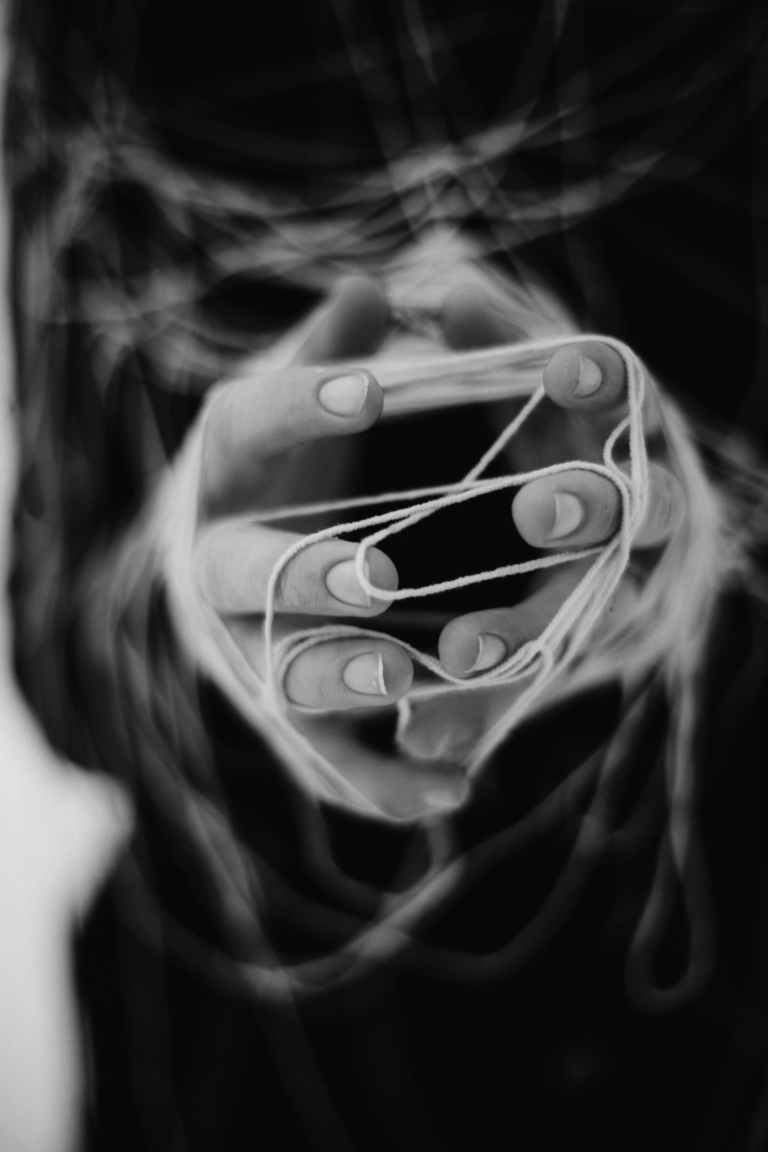
Reactive leadership creeps in quietly. It whispers at 11 PM when you’re refreshing your inbox “just one more time.” It hums beneath your skin during meetings when you haven’t heard half of what was said because you’re already three problems ahead. It pulses in your chest when someone asks a simple question and your body floods with the need to fix it now.
It’s 2:47 AM and Maya is awake, phone glowing in the dark, responding to a Slack message that came in six hours ago. It’s not urgent. No one expects a response until morning. But her nervous system doesn’t know that.
The message sits there, unfinished, incomplete—and her body reads it as threat.
What if they think I’m not on top of things? What if they’re waiting for me? What if I’m already behind?
She types quickly, hits send, and feels the familiar rush: relief tinged with exhaustion. She’s done it. She’s kept up. She’s stayed ahead.
Except she hasn’t. She’s just fed the pattern that’s been running her leadership for years.
This is reactive leadership. And it’s costing you more than sleep.
Understanding Reactive Leadership: More Than Just Busy
Reactive leadership is the constant state of responding to everything as if it’s urgent, even when it’s not. It’s the leadership style that lives in fight-or-flight mode, where every email feels like a demand, every question feels like a crisis, and every moment of stillness feels dangerous.
You know you’re in reactive leadership when:
- You answer emails at all hours, not because they’re urgent, but because they feel urgent
- You interrupt your own focus constantly to check Slack, messages, updates
- You feel perpetually behind, even when you’re ahead of deadlines
- Stillness feels uncomfortable—you need to be doing something, anything
- You struggle to delegate because you can move faster alone
- Decision-making feels frantic, like you’re always racing the clock
This isn’t about being responsive or dedicated. Reactive leadership is your nervous system stuck in survival mode, interpreting normal work rhythms as threats that require immediate action.
The Hidden Pattern in Reactive Leadership
Here’s what most leadership advice misses: reactive leadership isn’t a time management problem. It’s not about better boundaries or prioritization frameworks.
It’s a nervous system pattern that learned, somewhere in your history, that constant vigilance and immediate response kept you safe.
Maybe you learned it in a chaotic environment where you had to stay alert to survive. Maybe you learned it as the only woman in the room, where every response had to be perfect and immediate to prove you belonged. Maybe you learned it in a culture where your worth was measured by your availability and speed.
Whatever the origin, your body learned: Urgency equals safety. Stillness equals danger.
Now, years later, that pattern runs beneath your conscious awareness. You’re not choosing reactive leadership. Your nervous system is choosing it for you.
Reactive Leadership vs. Responsive Leadership
There’s a crucial distinction that gets lost in most leadership conversations: the difference between reactive leadership and responsive leadership.
Reactive leadership operates from urgency. Everything feels like it needs to happen now. Your body is flooded with stress hormones, your thinking narrows, and you move fast—but not necessarily effectively. You’re responding to the feeling of urgency, not the actual priority.
Responsive leadership operates from presence. You can distinguish between what’s actually urgent and what just feels urgent. Your nervous system is regulated enough to create space between stimulus and response. You move with intention, not compulsion.
The difference isn’t visible from the outside. Both look like engaged, active leadership. But internally, they’re worlds apart.
In reactive leadership, you feel driven. In responsive leadership, you feel grounded.
The Cost of Reactive Leadership
When you lead from reactive mode, your body pays first. The constant cortisol. The shallow breathing. The tension you carry in your jaw, your shoulders, your stomach. Your nervous system never gets to rest because there’s always another urgency demanding immediate attention.
Your relationships pay next. Teams led by reactive leaders become reactive themselves. The urgency is contagious. Everyone operates in crisis mode because that’s the energy you’re modeling. Collaboration suffers because there’s no space for thoughtful dialogue—just rapid-fire responses.
Your decision-making quality deteriorates. When you’re in reactive leadership mode, you’re literally using a different part of your brain. The prefrontal cortex—responsible for strategic thinking, nuance, and wise decision-making—goes offline. You’re operating from your limbic system, which is brilliant for survival but terrible for complex leadership challenges.
And your impact shrinks. Reactive leadership creates the illusion of productivity—look at all the emails answered! Look at all the quick decisions made!—but it rarely creates meaningful progress. You’re moving constantly but not necessarily forward.
The Anatomy of Reactive Leadership
To move beyond reactive leadership, you need to understand what’s actually happening in your body when urgency takes over.
The Urgency Signal
Your body has an internal alarm system designed to detect threat. When that alarm goes off, it releases a cascade of stress hormones that prepare you for immediate action. Your heart rate increases. Your breathing shallows. Your muscles tense. Blood flow redirects from your digestive system and prefrontal cortex to your limbs.
This is brilliant when you’re facing actual danger. It’s exhausting when it’s triggered by an email.
In reactive leadership, your alarm system has become hypersensitive. Normal work stimuli—a message notification, an unfinished task, a question from your team—trigger the same physiological response as genuine threat.
Your body doesn’t distinguish between a deadline and danger. It just knows: Something requires immediate attention. Move now.
The Impatience Trap
One of the signatures of reactive leadership is impatience—with yourself, with others, with processes. This isn’t a personality flaw. It’s your nervous system’s way of trying to discharge the activation it’s feeling.
When you’re in fight-or-flight mode, stillness feels intolerable. Your body is flooded with energy meant for action. Waiting, pausing, or moving at a measured pace feels like suppressing a survival response.
So you interrupt. You multitask. You finish people’s sentences. You skip steps. Not because you’re rude or careless, but because your nervous system is screaming at you to move faster.
The Behind Feeling
Women in reactive leadership often describe feeling perpetually “behind,” even when objectively, they’re not. You’re meeting deadlines, delivering results, exceeding expectations—and still, the feeling persists: I should be further along. I’m not doing enough.
This isn’t reality. It’s your nervous system’s way of keeping you in motion. As long as you feel behind, you’ll keep pushing. And pushing keeps you from feeling the discomfort of slowing down.
The behind feeling is a feature of reactive leadership, not a bug. It ensures you never stop long enough to exit the pattern.
Why Reactive Leadership Intensifies for Women
While anyone can develop reactive leadership patterns, women face specific pressures that intensify the tendency.
We’ve been taught that our responsiveness equals our value. That being constantly available proves we’re serious, committed, capable. That immediate response demonstrates competence in ways that thoughtful, delayed response doesn’t.
We’ve also been penalized for taking up space with our needs—for boundaries, for rest, for time to think. So we learned to move fast, to minimize our demands, to prove we’re not “too much.”
And for many women, especially women of color or women in male-dominated fields, reactive leadership was survival. When you’re scrutinized more heavily, given less margin for error, and working twice as hard to be seen as half as good, urgency mode isn’t optional. It’s adaptive.
The problem is, what was once adaptive becomes maladaptive. The reactive leadership that helped you survive early in your career becomes the pattern that prevents you from thriving as a senior leader.
The Somatic Shift: From Reactive Leadership to Regulated Presence
Moving beyond reactive leadership isn’t about better time management or stronger boundaries—though those can help. It’s about teaching your nervous system that it’s safe to slow down.
This requires somatic work. Body-based practices that interrupt the urgency pattern at its source.
Practice 1: The Urgency Pause
The next time you feel the pull to respond immediately—to an email, a Slack message, a request—pause. Just for 60 seconds.
Place both feet flat on the ground. Feel the support beneath you. Take three slow breaths, extending your exhale longer than your inhale (this signals safety to your nervous system).
Then ask your body, not your mind: “Is this actually urgent, or does it just feel urgent?”
Your body knows the difference. The reactive leadership pattern creates false urgency. When you pause and check in somatically, you can often feel the difference between real priority and nervous system activation.
If it’s actually urgent, respond. If it just feels urgent, schedule it for later—and notice how your body wants to resist this. That resistance is the pattern revealing itself.
Practice 2: The Speed Check-In
Reactive leadership operates at a specific tempo: fast, driven, relentless. Throughout your day, check your speed.
How quickly are you moving physically? How fast are you talking? What’s the pace of your thoughts?
If everything is rushed, your nervous system is in reactive mode—regardless of whether the tasks themselves require urgency.
Practice deliberately slowing down. Walk more slowly to your next meeting. Speak more slowly in conversations. Think before responding instead of responding while thinking.
This will feel excruciating at first. That’s how you know you’re interrupting reactive leadership at the somatic level.
Practice 3: The Completion Ritual
One of the drivers of reactive leadership is the feeling that nothing is ever truly finished. Even when you complete a task, your nervous system doesn’t register completion—it immediately jumps to the next urgency.
Create a somatic completion ritual. When you finish something—a project, a conversation, a work session—pause for 30 seconds.
Take a breath. Say aloud or internally: “This is complete.” Feel the completion in your body. Let your nervous system register: This is done. I can rest.
This practice interrupts the pattern of constant forward momentum that characterizes reactive leadership. It teaches your body that there are natural stopping points, not just an endless stream of urgencies.
Practice 4: The Stillness Practice
For women in reactive leadership, stillness feels dangerous. Your nervous system has learned that stopping means falling behind, losing control, becoming irrelevant.
Practice stillness in small doses. Set a timer for two minutes. Sit without doing anything. No phone. No email. No productive activity.
Just sit. Breathe. Notice what arises.
You’ll likely feel restless, anxious, uncomfortable. You might have the thought: This is a waste of time. I should be doing something.
That thought is reactive leadership defending itself. Stay with the stillness anyway.
Over time, this practice teaches your nervous system that stillness is safe. That you don’t have to be in constant motion to be valuable. That rest is not a threat to your leadership.
Practice 5: The Evening Boundary
If you’re answering emails at 11 PM, responding to Slack messages after dinner, or checking your phone “just in case” before bed, your nervous system never exits reactive mode. You’re teaching your body that work is a 24/7 urgency.
Create a somatic boundary around your evenings. Choose a time—say, 7 PM—after which you physically separate from work devices.
The first few nights will be difficult. Your body will generate anxiety: What if something important happens? What if someone needs me? What if I fall behind?
These feelings are real, but they’re not facts. They’re your nervous system trying to maintain the reactive leadership pattern.
Stay with the boundary anyway. Let your body learn, through repeated experience, that nothing catastrophic happens when you’re not constantly available. That you can respond in the morning. That your worth isn’t measured by your response time.
Reactive Leadership and the Myth of Productivity
One of the reasons reactive leadership is so seductive is that it feels productive. You’re moving fast, checking things off, responding immediately. Surely this means you’re effective?
Not necessarily.
Reactive leadership often creates the illusion of productivity while undermining actual impact. You’re busy, but you’re not strategic. You’re responsive, but you’re not thoughtful. You’re moving, but you’re not necessarily progressing.
Real productivity—the kind that creates meaningful impact—requires regulated presence, not reactive urgency. It requires the capacity to distinguish between what’s actually important and what just feels urgent. It requires space to think strategically, not just respond tactically.
When you shift from reactive leadership to regulated leadership, your output might initially feel slower. That’s because you’re no longer responding to every stimulus with equal urgency. But your impact will increase because you’re finally focusing your energy on what actually matters.
Building a Culture Beyond Reactive Leadership
If you’re a leader recognizing your own reactive patterns, you’re also seeing how they shape your team culture. Reactive leadership cascades. When you model urgency, your team learns urgency. When you respond at all hours, they feel pressure to do the same.
Shifting your own nervous system is the first step. The second is creating structural changes that support regulated leadership:
Name the pattern. Tell your team you’re working to shift from reactive to responsive leadership. Explain what that means: less immediate response, more thoughtful presence. Give them permission to do the same.
Model regulated boundaries. Stop answering emails after hours. Don’t reward the fastest response—reward the most thoughtful one. Show your team that urgent and important are not the same thing.
Create space for thinking. Reactive leadership culture has no room for reflection. Schedule meetings with breathing room between them. Build in time for strategic thinking that isn’t immediately tied to a deliverable.
Challenge the urgency narrative. When someone presents something as urgent, pause and ask: “Is this truly urgent, or does it feel urgent?” Help your team develop the same discernment you’re building in yourself.
Celebrate regulation, not just output. Recognize team members who are making thoughtful decisions, setting healthy boundaries, and working sustainably—not just those who respond fastest or work longest hours.
When Reactive Leadership Is Deeply Rooted
For some women, reactive leadership isn’t just a work habit—it’s a deeply rooted survival pattern that shows up across their entire lives. The urgency doesn’t stay at work. It follows them home.
If you recognize yourself here, be gentle. This pattern kept you safe once. It served you. And now it’s time to evolve beyond it—not because you’re broken, but because you’re ready for something different.
This level of reactive leadership often requires support. Somatic coaching. Trauma-informed therapy. Body-based practices that help your nervous system relearn safety in stillness.
It’s not a quick fix. But it’s possible.
The women I work with often say the same thing: “I didn’t realize how exhausted I was until I finally slowed down.”
That’s what’s on the other side of reactive leadership. Not laziness or complacency. Energy. Presence. The capacity to lead from a grounded, regulated place that doesn’t deplete you.
The Invitation to Lead Differently
If you’ve read this far and felt the recognition in your body—that familiar tightness in your chest, the impatience to move on to the next thing even while reading—that’s reactive leadership revealing itself.
This article isn’t asking you to change who you are. It’s inviting you to interrupt a pattern that’s been running you without your full awareness.
Reactive leadership feels like who you are because it’s been your default for so long. But underneath the urgency, beneath the constant motion, there’s a different kind of leader waiting.
One who responds from presence, not panic. Who moves with intention, not compulsion. Who creates impact without self-sacrifice.
That leader is still you. Just regulated.
Your Next Step Beyond Reactive Leadership
Start with one practice this week. Just one. Maybe it’s the urgency pause before responding to emails. Maybe it’s the evening boundary that teaches your body it’s safe to rest.
Notice what happens when you interrupt the pattern, even briefly. Notice the resistance. Notice the discomfort. Notice what’s underneath the urgency when you finally slow down enough to feel it.
Reactive leadership didn’t develop overnight, and it won’t dissolve overnight. But every moment you choose presence over urgency, you’re rewiring the pattern.
You’re teaching your nervous system that leadership doesn’t require constant crisis response. That you can be effective without being exhausted. That your value isn’t measured by your availability.
This is the shift from reactive leadership to regulated presence. It’s not about doing more. It’s about being more present with what you’re already doing.
And it changes everything.
Ready to move beyond reactive leadership? I work with women leaders who are ready to lead from regulation instead of urgency. If that’s you, let’s talk. Book a free discovery call here.