Leading through disruption is a role many senior women will be handed at least once in their careers — and often not by chance. Women are disproportionately appointed into leadership when organizations are already in crisis and the conditions for success are deteriorating — a phenomenon known as the glass cliff (Ryan & Haslam, 2005). This piece explores what happens inside a woman placed on that edge — how she begins to mistrust her own perception, how her body registers the truth long before her mind allows it, and what becomes possible when she finally listens.
It is 8:30 on a Thursday evening, and Louise is the only one left on her floor.
She is six months into the division head role she fought hard to win. She had wanted it for three years. She built the case, found the sponsor, navigated the politics, and when the restructure was announced and the role opened up, she made certain the decision-makers could not see anyone but her in the chair. They appointed her. She remembers the careful pride in her own voice when she told her partner that night.
Tonight she is sitting at her desk with her coat still on, looking at a spreadsheet that does not add up.
It is not large. The headcount she was promised has not fully materialized. Two hires have been quietly delayed by procurement. A budget line she remembers being verbally agreed upon in her appointment conversation has been re-coded somewhere upstream. Her chief of staff, who used to bring her things, has started bringing her fewer. The board member who championed her appointment has stopped returning her calls within the day. This is what leading through disruption looks like before anyone in the room is willing to call it that.
None of it is large enough to escalate. Each piece, on its own, has a reasonable explanation. She has the reasonable explanations memorized.
What she does not have memorized is why she is so tired. Not work-tired. Something else. A tiredness her hours do not account for. She has begun waking at four in the morning with her jaw aching. She rehearses sentences in the shower. She has stopped going to the gym, and she used to be the kind of woman whose energy was the thing people commented on.
She closes the spreadsheet. Opens her email. Closes it again. Sits in the silence of her own office and feels something she cannot quite name — a heaviness in her chest, a thought that will not finish itself. The thought wants to say something is wrong here. She does not let it.
Because if something is wrong here, she would have seen it. She is the one who sees it. That is her whole reputation. That is why they gave her the role.
She picks up her coat. Goes home. Does not say any of this out loud to anyone.
What Leading Through Disruption Looks Like From the Inside
We are taught to think of leading through disruption as a strategy problem. Markets shift. Restructures land. A leader navigates the conditions and either rises to them or doesn’t. Clean. Cognitive. A test of capability.
That is not what is happening to Louise.
Louise is not failing to navigate a disruption. Louise has been placed inside conditions that were already failing before she arrived, and given just enough resource, just enough authority, and just enough public confidence that she will absorb the failure as personal when it comes. She does not know this yet. Her body is starting to. The four a.m. waking is her nervous system reading the room.
The question is not whether Louise is good enough. Louise is good enough. The question is what she will do as the conditions slowly, undeniably, refuse to add up — and whether she will be able to trust what her body is telling her before her authority has been quietly eroded past the point of recovery.
The Glass Cliff Is Not an Accident
The pattern shows up in politics, in law firms, in companies announcing turnarounds. The story the organization tells itself is that it gave the woman a chance. The story the data tells is that she was handed a role from which a man, looking at the same conditions, would have walked away — or never been offered in the first place.
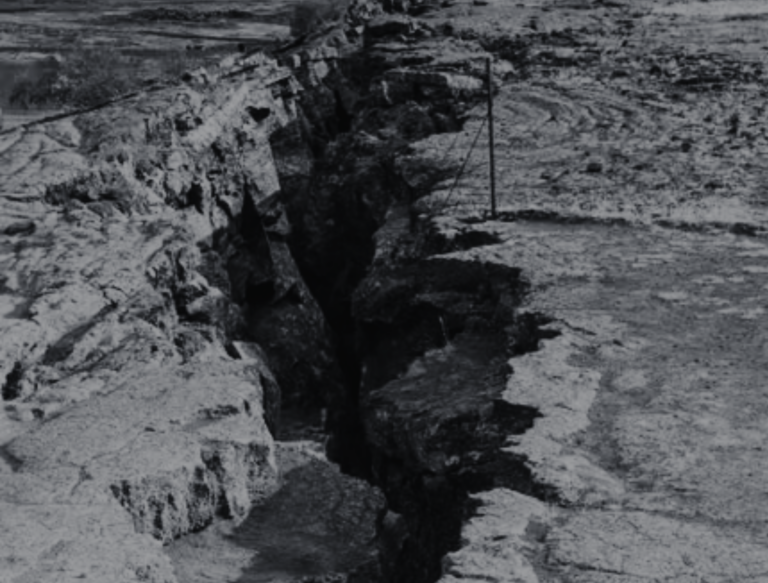
Louise fought for her role. That is the part the structural critique does not reach. She wanted it. She earned it on every metric. The cliff is not something done to her by people who lacked confidence in her. The cliff is the role itself — and the role looked, from where she stood, exactly like the prize she had been working toward for a decade. That is what makes it so hard to see from the inside. The cliff is wearing the face of the promotion she fought to win.
Why Leading Through Disruption Lands So Hard on Her
Six months in, Louise’s body knows. The four a.m. jaw. The rehearsing in the shower. The tiredness her hours do not account for. The thought that will not finish itself. The body has been reading the room for months. The mind has not been allowed to read what the body knows.
There is a reason for that.
Louise was raised to be the one who handles it. She was praised, from childhood, for competence, reliability, the capacity to make hard things look effortless. She was the daughter who held things together. She was the student who never missed a deadline. She was the young professional who said yes, and then yes again, and built her entire identity on being the woman you could put anywhere and trust to figure it out.
Leaving is not in her vocabulary. Naming an impossible situation out loud is not in her vocabulary. Saying the conditions I was promised have not materialized and I no longer believe they will is not in her vocabulary. The vocabulary she has is work harder, find a way, do not be the woman who couldn’t make it work.
The very qualities that got her appointed — the over-functioning, the refusal to be the one who lets the seam show, the trained absorption of impossible workload as personal challenge — are the qualities that will keep her on the cliff long past the point a man would have left, escalated, or renegotiated his terms.
The cliff does not just give her an impossible job. It gives her an impossible job designed to be held longest by the woman who will refuse, on the deepest identity level, to be the one who couldn’t.
The Myth: If She Just Leads Well Enough, She Can Save It
Underneath everything Louise is doing at eight-thirty on a Thursday evening is a single belief, and it is the one that will cost her the most.
If she just leads well enough, she can save it.
That if she works one more weekend, runs one more analysis, has one more difficult conversation with procurement, manages up to the board member who has gone quiet, she can turn the conditions around. That the problem is solvable from inside her role with the resources she has been given. That a better leader would have already turned it. That her job is to be that leader.
This is the most dangerous myth in leading through disruption.
Because the belief contains a hidden premise that is not true. The premise is that the conditions are workable. That the gap between what she was promised and what has materialized is a gap she can close through her own effort. That the room is honest with her. That the failure mode, if it comes, will be hers.
None of that is necessarily true on the cliff. The conditions may be unworkable by design — not maliciously, but structurally. The resource that was verbal-agreed may never have been real. The board member who has gone quiet may have known things in month two that Louise will not be told until month eighteen. The failure mode, if it comes, was baked into the role before she sat down in the chair.
The myth keeps her trying to lead her way out of a position that was not built to be led out of. And it does something worse than waste her effort. It teaches her, slowly, that her exhaustion is evidence of her inadequacy — when it is in fact evidence that her body has been carrying a truth her mind has not been permitted to name.
The Cost: Her Authority and Her Trust in Herself
The cliff takes the role. Everyone expects that. The role is the visible loss, the one that shows up in the press release and the LinkedIn post about her next chapter.
What the cliff also takes — and what no one prepares her for — is her authority and her trust in her own perception. This loss is the one that follows her into every room she enters afterward.
Because Louise will spend years replaying it. She will wonder whether she should have seen it sooner. She will wonder whether a sharper leader would have pulled it out. She will hold the failure as personal long after the data on the conditions has become clear, because the trained refusal to be the woman who couldn’t will not let her hold it any other way. Her authority — the thing she built over a decade, fought for, claimed as hers — gets quietly relocated, in her own mind, to a place she is no longer sure she has the right to claim.
And her trust in her own perception goes with it. For six months she felt the conditions were wrong. The four a.m. waking told her. The jaw told her. She overrode her body every time, because the body’s knowing did not match the story she had been given about the role. The lesson her nervous system absorbs, repeated for months, is brutal in its simplicity: what I sense is not safe to trust.
That is the deepest theft of the cliff. Leading through disruption, in this form, does not just take the role — it takes the perceptive, capable woman’s trust in the very faculty that would have protected her, at the point in her career when she most needs to read a room honestly. Years later, in a different role, she will hesitate before naming the thing she sees. She will second-guess the tightening in her chest. She will explain away the board member who stops returning her calls.
The cliff keeps working long after she has left it.
The Reframe: Her Body Knew First
Return to nine-forty on a Tuesday evening, and Louise alone with the spreadsheet.
The thought that would not finish itself was not a failure of nerve. It was not weakness. It was not the wrong instinct. It was her body delivering, through the only channel still open to it, a piece of information her training had taught her to refuse. Something is wrong here. That sentence was true at month two. Her body had been saying it longer than her mind had been allowed to hear it.
This is what leading through disruption — real leading, not the trained variety — actually requires of her. Not a harder push. Not a better strategy. The capacity to listen to the body that has been reading the room since the day she sat down in the chair, and to trust what it knows before her identity has been quietly remodeled around the cliff she is standing on.
Her body is not the thing getting in the way of her leadership. Her body is her leadership. It is the instrument that reads the conditions her conscious mind has been instructed to ignore. The four a.m. jaw was data. The tiredness her hours did not account for was data. The chest at nine-forty was data. None of it was weakness. All of it was perception arriving by the route her training had left available.
The work is not to override that perception harder. The work is to recognize it as the form her authority actually takes — and to act from it, before the cliff has cost her the authority she came in with.
What She Does Once She Listens
The first move is to name the conditions out loud, to herself, on paper, without softening. What was promised. What has materialized. What has not. Which lines have moved. Which calls have gone unreturned. Which agreements were verbal and have quietly evaporated. Not an emotional account. A factual one. The cliff survives on her willingness to keep explaining each piece away in isolation. It does not survive a page that lists them together.
The second is to stop carrying the gap as personal. The gap between what she was promised and what has materialized is information about the conditions, not information about her. Until she separates those two, every escalation she makes will sound, to her own ear, like an admission of inadequacy. Once they are separated, escalation becomes what it actually is: leadership.
The third is to make her body’s knowing a permitted source of information, out loud, in the rooms where decisions are made. Not as feeling. As perception. I have noticed that the resourcing committed in October has not materialized, and I no longer believe it will. I need us to address that directly before the next quarter. The sentence is calm. The sentence is grounded. The sentence comes from the body that has been telling her the truth for six months, finally given language and standing.
The fourth is to let leaving be a real option. Not as failure. As discernment. A leader who cannot leave is not leading; she is captive. The capacity to walk is part of what makes her authority real.
What Changes When She Listens
The day Louise stops overriding her body, something quiet shifts in how she occupies the role.
She becomes harder to disorient. Not because the conditions improve — they may not. But because she has stopped expending the daily energy required to disbelieve what she sees. The hours she used to spend rehearsing in the shower come back. The jaw eases. The thought at nine-forty finishes itself.
And her authority, which the cliff had been slowly relocating, returns to where it lives. Not in the role. In her. The role can be taken. The authority cannot, once she has learned where it actually resides.
She may save the division. She may not. The outcome of the cliff is, often, not in her hands — that is what cliff means. What is in her hands is whether she walks off it with her perception intact, her trust in her own body strengthened rather than broken, and her authority hers to bring into the next room she enters.
That is what leading through disruption actually asks of a woman in her position. Not heroic effort. The willingness to trust what her body knew at month two, and to lead from there.
Questions to Sit With
What has your body been telling you about the conditions of your current role that you have not let yourself name out loud?
Where in your career have you absorbed a structural failure as personal — and how is that absorption still shaping the rooms you enter now?
If you trusted your perception fully, what would you say in your next leadership meeting that you have so far chosen not to say?
Ready to Lead from Your Own Authority?
If you recognize yourself in Louise’s story — if you are leading through a disruption whose conditions are not adding up, and your body has been carrying the truth longer than you have been letting yourself hear it — there is a different way to lead.
I work 1:1 with senior women leaders who are ready to reclaim their authority from the inside out: not by pushing harder against impossible conditions, but by learning to trust the perception their body has been offering them all along.
Book a 1:1 free clarity session, and let’s begin the work that gives you your discernment back — and with it, your leadership.