Leading through uncertainty is one of the most repeated phrases in modern leadership — and one of the least understood. We treat it as a strategy problem: incomplete information, a hard call, a thing to navigate with a better framework. But the frameworks miss the moment that matters most. The moment a woman leader is looked to for an answer she does not have, in front of the people who count on her. Here is the paradox no one names: the threat was never the unknown. The threat was being seen in it.
Jill is mid-sentence when the door opens.
She is at the front of the room, walking her team through the rollout — every milestone sequenced, pressure-tested, rehearsed until she could deliver it in her sleep. Steady voice. Clear slides. The competence they have come to count on.
Her manager steps in. Says the budget has been pulled.
The number every milestone depended on is gone. And every face in the room turns back to Jill.
Something moves through her body faster than thought — a heat that starts at the base of her neck and climbs, into her chest, up across her face, and she is certain everyone can see it. Her mouth is open. Her hand finds the edge of the table.
She hears herself say “Okay.” Then nothing. The silence stretches a half-second too long, and in that half-second a verdict arrives in her body, older and faster than language: they can see. They can see she doesn’t know.
She recovers. She always does. She says something about regrouping, about circling back, and moves them on to the next item. The meeting ends. She disappears into her office before anyone can stop her.
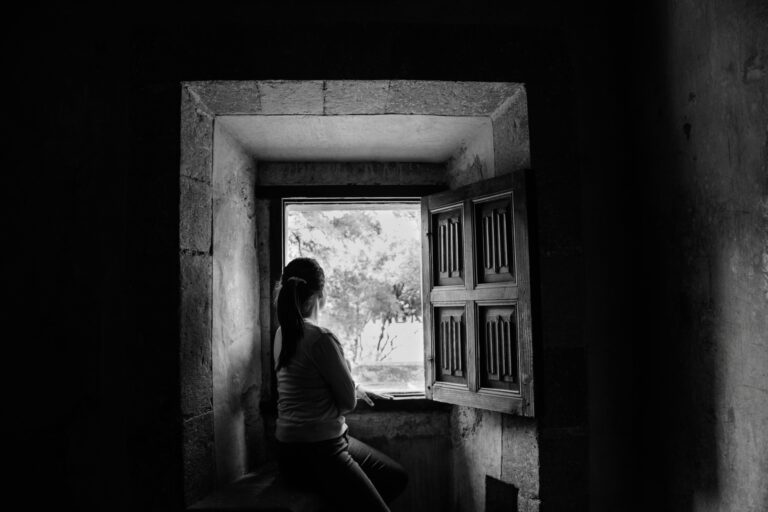
She closes the door. Sits down. Her hands are still warm.
She did everything right. She was prepared. The budget decision had nothing to do with her. So why does it feel like she was caught at something? Why does it feel less like the situation changed, and more like she was found out?
Leading Through Uncertainty Is Not an Information Problem
What is making Jill’s hands warm is not the missing budget. It is the feeling of standing exposed — without an answer, without cover — in front of the people who put her at the front of the room. That is where the shame lives. Not in the not-knowing, but in the being seen not-knowing.
This is a distinction the body makes with absolute precision — a process neuroscience calls neuroception, the nervous system’s below-conscious threat assessment. Neuroception does not evaluate the situation logically. It evaluates whether the self is exposed. And when it detects exposure, it triggers the same cascade the body reserves for genuine danger: cortisol surges, blood flow redirects to the limbs, the prefrontal cortex begins to go offline. The shame and the physiology are not separate events. The shame is the body’s threat signal — the felt sense that something essential about her has been seen before she could protect it.
That is what floods her face with heat and makes her replay the meeting alone in her office at six p.m., trying to understand why she feels caught when nothing was, technically, her fault.
The Shame She Learned Before She Had Words For It
The shame did not begin in that conference room. It was trained into Jill long before she ever stood at the front of one.
She was rewarded, early and consistently, for a particular kind of competence. For anticipating what people needed before they asked. For smoothing the friction in a room. For carrying the invisible load. For making the hard thing look effortless. Praise arrived for having it handled. It almost never arrived for visibly figuring it out.
The lesson underneath was quiet and total: a woman who does not yet know is a woman who is not yet enough. A man pauses in front of a room and the pause is read as thoughtfulness — as weight, as gravity, as a mind at work. A woman pauses in front of a room and the pause is read as uncertainty. And uncertainty in a woman has always carried a cost it never carried for him — not because the room is consciously punishing her, but because the room was built on a template that coded female hesitation as incompetence and male hesitation as depth.
So she did the thing the conditions demanded. She over-prepared. She made certain she always had the answer, so no one would ever have to watch her reach for one. Her competence became armor. And the armor worked — until the budget was pulled and the room watched her stand at the edge of what she knew with nothing in her hand.
That is where shame and conditioning meet. The heat in her face was not a reaction to the budget. It was twenty years of training firing at once, insisting: to be caught not-knowing, as a woman, in front of people who rely on you, is dangerous.
The Map and the Edge of Leading Through Uncertainty
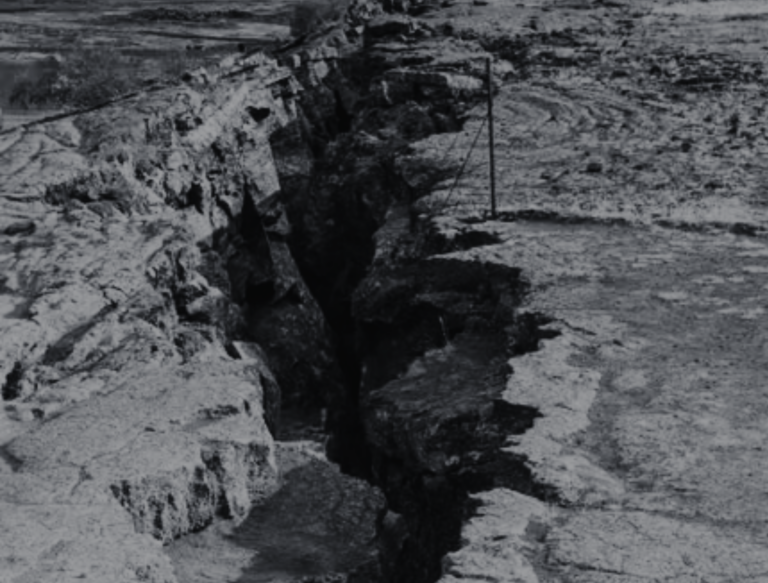
On the oldest maps, the known world was drawn in careful detail — coastlines, rivers, trade routes. And then, at the edge of the known, the detail simply stopped. Beyond it lay blank vellum, or a sketched sea creature standing in for everything the mapmaker could not chart.
Jill has built her authority on having the map. She is the one who knows the terrain, who has walked it before, who tells everyone which way to go. The budget announcement did not redraw her map. It dropped her past its edge — into the blank space — while the entire room watched.
But here is what the shame will not let her see: a cartographer is not someone who has memorized a finished map. A cartographer is someone who makes one. And a map is only ever made at the edge of the known. Everything inside the charted territory could have been handled by a process, a playbook, someone more junior. Jill is needed here. Past the edge. Exactly where she does not know.
The verdict her body delivered — I have been found out — was neuroception doing its job. The truer reading is quieter: I have arrived at the part of leadership no one can do for me. The not-knowing is not exposure. It is the threshold of her actual contribution.
What Happens in the Body When Leading Through Uncertainty Fails
When shame floods the system faster than conscious thought, the body reaches for whatever has worked before to make the exposure stop. It tends to take one of four shapes.
Fight. She defends the plan that no longer exists. Talks faster, grows sharp, argues the budget decision. The sympathetic nervous system floods her with adrenaline and the energy goes into proving — if she can out-argue the moment, she will not have to feel caught inside it.
Flight. She deflects. Let me take that offline. She reaches for the next slide. The same sympathetic activation powers the exit — not because deferring is wrong, but because here it is an escape, not a choice.
Freeze. She goes blank. The thought will not complete. The dorsal vagal complex has pulled the emergency brake. To the room she looks composed. Inside, the system has gone offline. This is not calm. It is shutdown wearing composure as a mask.
Fawn. She absorbs blame that is not hers. I should have seen this coming. She manages everyone else’s discomfort, makes herself agreeable and small. The nervous system has calculated that the safest move is appeasement — dissolve the threat by dissolving yourself.
These are not character flaws. Each one is an old strategy for surviving exposure. But notice what they share: not one of them is leadership. In the moment that defines what leading through uncertainty actually requires, the body has quietly substituted self-protection for the thing the room needs from her. And because it happens faster than thought, she does not experience it as a choice. She experiences it as simply who she is under pressure.
It is not who she is. It is what her body learned to do through years of conditioning.
What the Team Learned in That Half-Second
Jill thinks the half-second was hers. It wasn’t.
Her team could not have named what they felt. But their nervous systems registered it — through co-regulation, the constant below-conscious communication between nervous systems in a shared space. When the leader’s system shifts into protection, every system in the room shifts with it. They felt her go tight. They felt the air change.
From that single moment, several things cascade — quietly, cumulatively, meeting after meeting.
The information pipeline narrows. Her team stops bringing the half-formed concern, the early warning, the something feels off here. They bring the polished and the certain. They keep the uncertain to themselves.
Trust erodes below language. The team senses the incongruence — a leader who says bring me anything but whose body tightens at the table’s edge. They stop believing the invitation. Trust is a nervous system event before it is a cognitive one.
Decision quality declines. She is leading with a map her team has stopped updating. The very information she needs to lead is the information her protective response has made it unsafe to deliver.
The cycle compounds. Her withdrawal increases her uncertainty, which increases her activation, which tightens the room further. This is the contagion effect of nervous system states — and in leadership, it moves in one direction: from the top down.
People do not follow the leader who always has the answer. They follow the leader beside whom they feel safe not knowing.
The Myth That Makes Leading Through Uncertainty Impossible
The idea that to lead is to know — that the leader is the one with the answers, and the moment she does not have one, she has briefly stopped being a leader — is not ancient wisdom. It is a narrow inheritance from a command-and-control era that no longer matches the conditions any of us are leading in.
No leader today holds a complete map. The terrain shifts faster than any one person can chart it.
AI, technological advancement, shifting markets, and evolving business models are redrawing the map in real time. The old leadership model, where authority comes from having the answers, is becoming increasingly difficult to sustain.
The woman who has staked her legitimacy on certainty has staked it on the one thing the present cannot give her.
She is not the strong one in the room. She is the most fragile — her steadiness depends on a condition that has already left the building. The moment certainty is gone, she has nothing underneath the performance to stand on. That is what Jill felt. Not weakness. The discovery that what she had been standing on was never the floor.
Three Moves for Leading Through Uncertainty at the Edge of the Map
These are not techniques for hiding the not-knowing. They are distinct moves for remaining a navigator inside it.
Move 1: Name the terrain honestly, without apology. Not I’m so sorry, I don’t have this. The navigator’s version: That changes things significantly. Let me think this through with you. This breaks the co-regulation loop tightening the room. When a leader names reality without performing distress, the team’s nervous systems receive a different signal — not danger but we are in new territory together. That is the signal that keeps a team telling their leader the truth.
Move 2: Ask a precise question instead of producing an immediate answer. The shame demands she prove she still belongs at the front of the room. The work is to refuse that demand. What do we know for certain right now, and what just became unknown? A precise question redirects the cognitive load from one activated nervous system to the distributed intelligence of the room. It includes the team in the act of leading through uncertainty rather than performing certainty at them.
Move 3: Separate the next step from the whole map. I don’t have the complete picture yet. Here is the one thing we do next. This addresses freeze directly — freeze happens when the gap between where I am and what I need to know feels too large to bridge. The whole map was never the task. The task is the next honest bearing.
Each move interrupts the protective pattern at a different point. The first interrupts the performance. The second interrupts the isolation. The third interrupts the paralysis. Together, they constitute a way of leading through uncertainty that does not depend on the uncertainty resolving first.
What Changes When She Leads From the Edge
When she stops performing certainty and starts leading from the edge of the map, the room changes before she does.
The team settles. Through co-regulation, the same mechanism that once broadcast her tension now broadcasts her steadiness. The air opens.
The information flows again. The team finds permission to bring the half-formed thought, the early warning. The silence she once created fills back in with the intelligence she actually needs to lead.
She becomes harder to blindside. Not because she sees further — because her team is finally telling her what they see.
Her authority deepens. In her willingness to stand visibly at the edge of what she knows, she becomes the more trusted leader, not the less. The performance of certainty borrows against a credibility account that eventually empties. Leading through uncertainty honestly makes deposits into it.
The cycle reverses. Regulation breeds regulation. Her steadiness calms the room; the room’s honesty gives her better information; better information reduces her activation. The contagion effect that once compounded dysregulation now compounds trust.
The heat will still rise. The point was never to stop feeling it. The point is that it no longer gets to decide what she does next. The next time the door opens and every face turns to her, her body will offer the old line — they can see she doesn’t know. She will be able to let a longer breath answer with the truer one: I have arrived exactly where I am needed.
That is what leading through uncertainty actually asks of a woman leader. Not a better map. The willingness to be the steadiest presence at its edge — and to make that edge a place her whole team can finally breathe.
Questions to Sit With
The last time you were caught not-knowing in front of the people who rely on you — where did you feel it in your body, and which shape did it take?
Whose voice taught you that being seen not-knowing, as a woman, was dangerous? Is that voice describing the room you are in now, or a much older one?
What is your team no longer telling you, because they once felt you tighten at the edge of the table?
Ready to Lead from the Edge of Map?
If you recognize yourself in Jill’s story — if you have spent your career making certain no one would ever catch you not knowing — there is a different way to lead.
I work 1:1 with women leaders who are ready to inhabit the full expression of their authority: not by having every answer, but by learning to stay grounded, present, and unmistakably themselves in the exact moments the map runs out.
Book a discovery call, and let’s begin the work that changes how you lead — from the inside out.




One Comment